
Why Sun Safety Matters for Children
Sun safety tips for kids are important for every parent and caregiver. Children have delicate skin, which burns more easily than adult skin. Because of this, they are at a higher risk for sunburn and long-term skin damage. Even on cloudy days, harmful ultraviolet (UV) rays can reach your child. Over time, too much sun can increase the risk of skin cancer. Therefore, it is vital to protect your child from the sun every day.
Common Risks of Sun Exposure in Kids
Children love to play outside, but too much sun can be harmful. For example, sunburn is a common problem in kids. But sunburn is not the only risk. Too much sun can also cause:
Because kids spend more time outdoors, they need extra protection. According to the CDC, most sun damage happens before age 18.
Essential Sun Safety Tips for Kids
To keep your child safe, follow these simple sun safety tips for kids:
In addition, teach your child about sun safety from an early age. This helps them build healthy habits for life.
How to Choose and Use Sunscreen for Children
Choosing the best sunscreen for kids can be easy if you know what to look for. First, pick a sunscreen with broad-spectrum protection. This means it blocks both UVA and UVB rays. Next, choose a sunscreen with SPF 30 or higher. For sensitive skin, look for mineral sunscreens with zinc oxide or titanium dioxide. These are gentle and less likely to cause irritation.
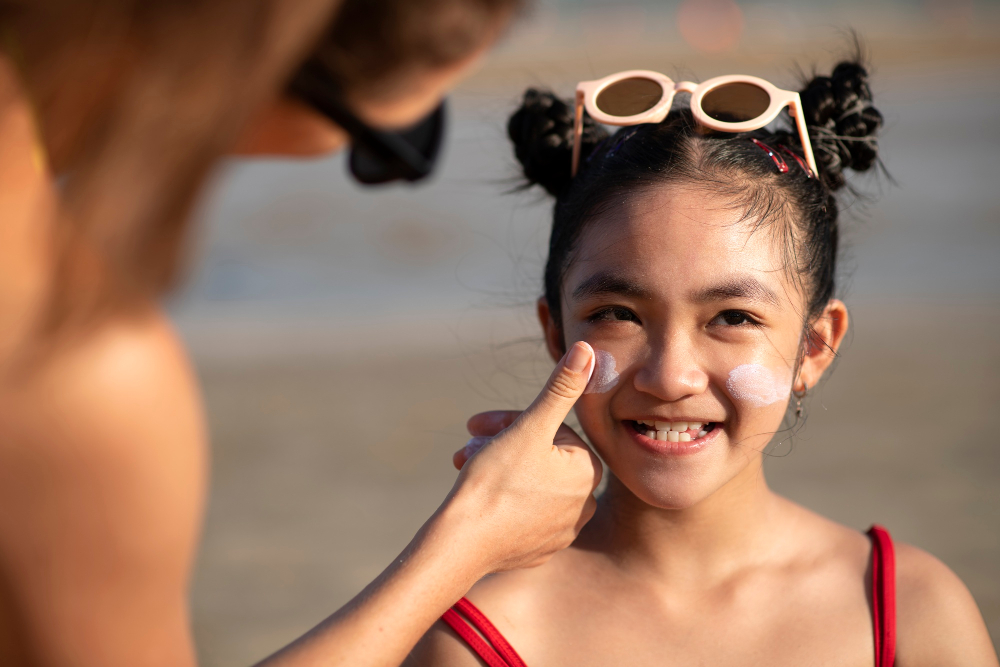
Before applying, test a small amount on your child’s skin. If there is no reaction, use enough sunscreen to cover all exposed skin. Remember, reapply every two hours, or after swimming or sweating. Even waterproof sunscreens need to be reapplied.
Protective Clothing and Accessories
Besides sunscreen, clothing is a strong shield against the sun. For example, long-sleeved shirts and long pants offer good coverage. Choose tightly woven fabrics for better protection. In addition, wide-brimmed hats shade the face, ears, and neck. Sunglasses with 100% UV protection keep your child’s eyes safe. Some clothing brands offer special sun-protective clothes labeled with UPF (Ultraviolet Protection Factor).
Safe Outdoor Activities and Timing
When planning outdoor play, timing matters. Try to avoid the sun between 10 a.m. and 4 p.m. During these hours, UV rays are strongest. Instead, plan activities in the early morning or late afternoon. If your child must be outside during peak hours, seek shade under trees, umbrellas, or tents. Parks and playgrounds often have shaded areas, so use them whenever possible.
Signs of Sunburn and What to Do
Even with care, sunburn can happen. Watch for these signs:
If your child gets sunburned, move them out of the sun right away. Cool the skin with a damp cloth or a cool bath. Offer plenty of water to prevent dehydration. For mild pain, you can use child-safe pain relievers. Do not pop blisters. If the sunburn is severe, or if your child feels very ill, contact your doctor.
Prevention Strategies for Families
Families can work together to stay safe in the sun. For example, set a good example by using sunscreen and wearing hats yourself. Remind children to take breaks in the shade. Keep extra sunscreen, hats, and water in your bag when you go out. In addition, talk to your child’s school or daycare about sun safety rules. By making sun safety a family habit, you help protect everyone.
Conclusion: Keep Your Child Safe in the Sun
Sun safety for children is simple but very important. By following these sun safety tips for kids, you can help prevent sunburn and long-term skin damage. Remember, healthy sun habits start early and last a lifetime. Consult your pediatrician for personalized sun safety advice.